
 Budapest has a lot of nice and cosy Retro Style Art cinemas and one of those is KINO at the Körút. And the even better news is, that this cinema has also a nice coffeeshop, which even without watching a movie is worth to visit. They have tasty cakes, an excellent white chocolate and great beers: Krombacher from Germany and San Miguel from Spain!
 I should have had at least one beer before the private screening of a documentary by my Ambassador colleague Scott, who produced a documentary about the writer of the so called suicide song "Gloomy Sunday". We are all still alive!
It was a great experience to watch this very interesting documentary about the life and song of Rezső Seress, who being so loyal and dedicated to Hungary, never went to USA to collect his royalities from his famous song! In 1968 he committed suiced.
Private screening in a wonderful Budapest Retro cinema, another small aspect of our Budapest way of life!
Thanks Scott!
Christian
Monday, February 21, 2011
Screening at KINO cinema - by Christian
Monday, January 24, 2011
Merlin theatre - Christian
 Those, who dont speak Hungarian, face a little problem in Budapest, they are not able to share the an important part of the great cultural life in Budapest, the theaters. There are a lot and Budapesters love to go to theaters. But there is one big chance for us, it is the Merlin Theater close to Déak Square, which offers English evenings on Mondays and Wednesday.
You can enjoy plays in English or Hungarian with English Subtitles. We had the pleasure to be invited by the Merlin Theater and could look behind the scenes and backstage (which later played a confusing "role" during my evening there). Then we were supposed to watch a play, called Pornography, which created some inner desires in myself and the desire to bring in a beer into the play. But that is strictly prohibited, but I could manage to bring it in. The play was great, but during it I needed to go to the rest room, but that is also STRICTLY prohibited. I managed to go out, but it was so dark, that I ended in the backstage and crashed with the actors.. finally I managed to make it to the restroom, but then I was not allowed to go back to the audience. But I could enjoy the great cocktails (Happy Hour from 18:00 to 22:00 hrs) at the bar and then a concert in the bar area. And I was invited by Merlin for a free beer, for all the "complications" I needed to go through!
Merlin Theater is a great place for a very colorful evening: Cocktails, good food and beers, dramas on and off the stage and great concerts! Budapest at its best!
Christian
Kaffeehauskultur in Budapest - Christian
Read below in English Mit der türkischen Herrschaft hielt der Kaffee Einzug nach Ungarn, aber wirklich beliebt wurde
die so genannte ,,schwarze Suppe“ erst zwei Jahrhunderte später: Im 19. Jahrhundert tauchten
die ersten Pester Kaffeehäuser auf, die eine Zwischenlösung zwischen den alten und einfach
eingerichteten östlichen Cafés und den reichen und bürgerlich eingerichteten westlichen
Lokalen bildeten.
Nach dem Zweiten Weltkrieg entstand in Budapest die schnelle Variante der gemütlichen
Kaffeehäuser: der so genannte ,,Eszpresszó“. Man hatte keine Zeit mehr für langes
Herumsitzen und Zeitunglesen. Stattdessen gingen die Kunden nur auf einen schnellen
Espresso vor und nach der Arbeit ins ,,Eszpresszó“. Das Ziel war Funktionalität. Die berühmte
Kaffeehauskultur erlebte während des Sozialismus einen regelrechten Niedergang.
Der Großteil der klassischen Kaffeehäuser wurde geschlossen oder umgestaltet.
Erst in den 90er Jahren des vergangenen Jahrhunderts – nach der politischen Wende – begann
wieder eine Blütezeit für die traditionellen Cafés. Die Stadt sehnte sich nach ihrer
Kaffeehauskultur zurück, alte Lokale wurden renoviert und wiedereröffnet, andere neu eröffnet.
Regelrechte Gastronomiemeilen entstanden in der Ráday utca und auf dem Liszt Ferenc tér. Die berühmten Kaffeehäuser Centrál, New York und Astoria erscheinen in neuem Glanz.
Meiner Meinung nach kann man die alte Budapester Kaffeehauskultur noch im Cafe Central und im Cafe Gerbeaud spüren. Im Centrál ist der Service und die Qualität ausgezeichnet, im Gerbeaud sind mir zu viele Touristen, die Preise überhöht und die Bedienerinnen zeigen teilweise eine grantige Arroganz. Der launige Ober gehört ja mehr zur Wiener Kaffeehauskultur…Das New York hat für mich den Flair der Vergangenheit ziemlich verloren, es ist (fast) zu schön renoviert und gehört zu einem 5-Stern Hotel.
Im wunderschön renovierten Jugendstil  Warenhaus Párizsi Áruház auf der Andrássy Straße befindet sich das Lotz Kaffeehaus mit wunderschönen Fresken, für mich eines der schönsten Kaffeehäuser der Welt
In den letzten Jahren öffneten einige Ketten mit dem Starbucks-Konzept und auch Starbucks selbst ist nun in Budapest vertreten. Da gibt es z.B. Coffee Heaven, California Coffee oder Coffee Company. Aber diese gehören mehr zur globalen Kaffeehauskultur also zur Budapester, allerdings schmeckt der Kaffee gut und vor allem die überwiegend jungen Besucher schaffen eine positive Atmosphäre.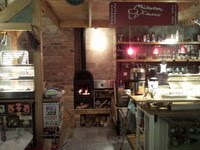 Man findet auch viele neuere kleinere Kaffehäuser in Budapest, wo der Eigentümer selbst noch hinter der Kaffeemaschine steht, meine persönlichen Favoriten sind das Müterem Kávezó in der Tavaszmezö Straße, das Moods in der Weselenyi Straße bei der großen Synagoge oder das Café Pertu in der Dob Straße.
Aber wo man meiner Meinung nach am ehesten auf eine authentische Budapester Kaffeehauskultur treffen kann, das ist wohl die (alte) Budapester Cukrászda (Konditorei), die teilweise noch im Stile der 50er oder 60er vorzufinden ist, speziell auch in den kleineren Nebenstraßen der Bezirke 6-9 in Pest. Nicht immer ist der Kaffee ausgezeichnet, doch die Torten und leckeren Kuchen schmecken immer und die Preise sind teilweise unglaublich niedrig. Einfach in Pest herumspazieren und nach Retro-Schildern suchen, wo Cukrászda draufsteht und je älter die Einrichtung und die Angestellten, desto authentischer ist die Konditorei, z.B. in der Dób Utca zwischen Karoly Körut und Klauzal Tér befinden sich mindestens 3 solcher Konditoreien und Kaffehäuser. In Buda kann ich besonders das Ruszwurm im Burgviertel empfehlen, wo es einen leckeren Tiroler Apfelstrudel gibt, den ich allerdings in Tirol noch nie gefunden habe, obwohl ich dort geboren bin. Und ein Phänomen ist das Daubner in Buda, eine Konditorei ohne Sitzplätze, wo allerdings immer eine riesige Schlange davorsteht und man dann den Kaffee und den Kuchen im Stehen genießt.
 Und eine echte Budapester Institution ist Jégbufé am Ferenciek Tér. Seit 1952 kann man dort zu sehr günstige Preisen im Stehen Kaffee und herrliche Backwaren und Torten genießen, und dabei die Wartenden draußen an der Bushaltestelle beobachten, wo immer ein paar sehr hübsche Mädchen stehen, was uns dann eigentlich wieder an Budapest erinnert…
Christian
Read here in English:
Café Culture in Budapest
Coffee arrived to Hungary at the time of the Turkish rule. However, the so-called “black soup” had not become really popular up until two centuries later. The first coffee houses started to appear in Budapest over the course of the 19th century, standing somewhere in the middle between old oriental cafés with their simple design and rich Western venues with their middle-class setting.
After World War 2, a “fast drink” variety of the cosy cafés was created; these were the so-called eszpresszós. People did not have the time anymore to sit around for hours, reading the paper; instead, visitors only dropped in for a quick espresso before and after their workdays. The main goal was functionality. The well-known Budapest café culture experienced a veritable breakdown during the Socialist era, with most traditional cafés closed down or redesigned.
A period of revival for traditional coffee houses had not started up until the ’90s of the last century, i.e. with the fall of the Iron Curtain. The city was eager to get back its old café culture; old venues were renovated and reopened, and some new ones established. Some real gastronomy miles were created in Ráday Street and on Liszt Ferenc Square. Central, New York, Astoria and other renowned cafés have reappeared in new glamour.
In my opinion, the old Budapest café culture is most distinctly present in Café Central and Café Gerbeaud. Central has high-quality service and offerings; however, Gerbeaud has, for my liking, too many tourists, too high prices and some grumpy and arrogant staff. Moody waiters should, as I see it, rather be part of the Vienna café culture... New York has lost most of its old charm; it is (nearly) too beautifully renovated and now part of a 5-star hotel. I believe that Lotz Café, located with its stunning frescos in Párizsi Áruház, a wonderfully renovated Art Nouveau department store on Andrássy Street, is one of the nicest cafés in the world.
Over the last few years, some franchise chains with the concept of Starbucks have been opened up; now Starbuck itself is also present in Budapest. In this category, you have among others Coffee Heaven, California Coffee or Coffee Company. These, however, are more part of the global café culture than the special one in Budapest. Still, they have good coffee and the mostly young clients create a really nice atmosphere.
You can also find lots of small, new coffee houses in Budapest, where the owners themselves stand behind the counter. My personal favourites are Műterem Kávezó in Tavaszmező Street, Moods in Wesselényi Street near the Great Synagogue and Café Pertu in Dob Street.
However, where you can find the café culture in Budapest in its most authentic form are most probably (old) cukrászdas (pastry shops), partly still designed in the style of the ’50s or ’60. Many of these are located in Pest, in the 6th to 9th Districts. The coffee is sometimes not that excellent, but the tarts and cookies are always brilliant and the prices are in some cases unbelievably favourable. Just walk around in Pest, looking for retro sings saying cukrászda. The older the furniture and the staff, the more authentic the pastry shop. In Dob Street between Károly Boulevard and Klauzál Square, at least three cafés and pastry shops of this kind can be found.
My special recommendation in Buda is Ruszwurm in the Castle District, where you can have a delicious “Tirol apple strudel”, which I have not yet found in the Tirol region, although I was born there.
Daubner in Buda also has a very good name—a pastry shop without any seats but always with a long queue in front of the building, where you can enjoy your coffee and cookies while standing.
Another genuine establishment of Budapest is Jégbüfé, located at Ferenciek Square. Since 1952, visitors have been able to enjoy coffee and some gorgeous pastries and tarts at reasonable prices while standing and watching people outside at the bus stop. There are always some really nice girls, reminding you again and again of the fact that you are in Budapest...
Christian Leia Mais…
Wednesday, January 12, 2011
Top 10 Winter Attractions in Budapest - Christian
Read below in English Der Winter bricht an und macht uns bewusst, dass es kaum etwas Schöneres gibt, als die warmen, romantischen Sommernächte in Budapest auf dem Weg nach Hause von der Margaretheninsel, ganz gleich, ob man aus einem Club, aus dem Bad oder von einem abendlichen Lauf kommt. Auf der Margarethenbrücke kann man das unvergleichliche Budapester Panorama genießen, das zum UNESCO Welterbe gehört. Sowohl im Sommer als auch im Winter kann man den magischen Anblick der Sterne genießen, die sich in der Donau spiegeln oder am Himmel glänzen, während man im wunderbar warmen Wasser des Széchenyi-Bades entspannt. Unter den Top 10-Winterattraktionen ist dies mein persönlicher Favorit in Budapest und auch die dampfenden und heilsamen Wässer der anderen Budapester Bäder (z.B. Rudas, Gellért, Dagály) sollten Sie sich nicht entgehen lassen.
Der Winter in Budapest kann hart sein. Die Thermalbäder sind jedoch das beste Gegenmittel gegen die Dunkelheit und den mitteleuropäischen Frost, genau wie Pálinka, ein weiteres Lebenselixier, das in jedem Fall auch zu den Winterattraktionen gehört.
Für unternehmungslustige Menschen bieten sich für diese Jahreszeit die Ausstellungen und Museen in Budapest an. Wie wäre es also mit einem Besuch im Ludwig-Museum oder im (durchaus bedrückenden) Museum „Haus des Terrors” (Terror Háza)? Auch das Millenáris lädt zu Ausstellungen ein, im Museum der bildenden Kunst (Szépművészeti Múzeum) warten Klimt und die Art Nouveau und gegenüber in der Kunsthalle (Műcsarnok) die zeitgenössische Kunst. Wem das zu hoch ist, für den ist vielleicht das Dreher Biermuseum (Dreher Sörmúzeum) in Kőbánya das Richtige. Oh je, wenn man diese ganzen Museen zu den Attraktionen zählt, dann ist die TOP 10-Liste schnell gefüllt, aber Budapest hat im Winter noch viel mehr zu bieten. Mit der Zahnradbahn und der Kindereisenbahn kann man Normafa erkunden und falls Schnee liegt, sollten Sie dabei Ihren Schlitten nicht vergessen. Ein stiller Spaziergang durch den Wald führt Sie zu den kleinen Holzhütten, an denen Strudel (rétes) und Glühwein verkauft werden.
Wenn Sie gerne Schlittschuh laufen (und wer tut das nicht, schließlich gibt es doch keine bessere Gelegenheit, Mädchen anzusprechen, denen man nach einem Sturz aufhilft ...) gäbe es in Budapest im Stadtwäldchen (Városliget) eine der größten und schönsten Eisbahnen. Nur leider wird diese zurzeit rekonstruiert. Stattdessen können Sie aber auf dem Dach des Westend oder auf dem Széna-Platz in der Nähe vom Mammut das Eis genießen. Der Budapester Weihnachtsmarkt gilt als einer der besten in Europa und in diesem Jahr ist er noch größer als sonst. Kleinere Märkte finden Sie außerdem auf dem Liszt Ferenc-Platz und dem Blaha Lujza-Platz. Auch auf dem Schloss von Nagytétény geht es weihnachtlich zu. Der Schmuck für die Tannenbäume stammt von bekannten ungarischen Volkskünstlern.
 Und es gibt eine ganz besondere Budapester Attraktion, die ich auch im Sommer schon erwähnt habe:
Die Budapester Hausparty, diesmal in der Winterausgabe. Heizen Sie Ihre Wohnung so gut Sie können, entweder mit Gas – dann wird es ein bisschen teurer – oder (die billigere Variante) mit jeder Menge Gäste. Laden Sie alle Ungarn ein, die Sie kennen. Halten Sie eine große Portion Glühwein bereit und reichern Sie diese heimlich mit 55%-igem Pálinka an. Dann haben Sie eine weitere Budapester TOP-10 Winterattraktion. Ich empfehle Ihnen jedoch, die Nachbarn mit etwas Glühwein zu bestechen und Ihre Wohnung vorher gut zu versichern.
Christian Brandmayr
Read here in English:
Winter is coming now and yes, we must admit, that nothing compares to a warm and romantic Budapest summer night, when you walk home from a club, evening run or a bath from Margaret Island over Margaret Bridge, from where you can enjoy the incomparable panorama of Budapest, which is even a UNESCO World Heritage. Once thing is the same in winter and summer, the stars are magically sparkling in the Danube as they do on the sky, when you are soaking outdoors in the wonderful hot water of Szechenyi Bath. And that is Top 10 winter attraction number 1 in Budapest for me and you should feel free to test also the healing and steaming waters in some other Budapest bathes (e.g. Rudás, Gellért, Dagály..).
Winter can be hard in Budapest, with no sunshine and light and bloody cold, but those bathes are the best survival kit for a frosty Central European winter and with a shot of Pálinka they become a turbo-survival kit. So let’s add Pálinka to winter attractions, responsibly though.
And for those sporty, fun and party loving people, who love to live…in Budapest, the time now came to check out some museums and exhibitions. So what about a jump into the Ludwig Museum, a shock at Terror-Ház, an exhibition at Millenáris, Art Nouvau with Klimt at the Szépművészeti Múzeum, contemporary art at the Mücsarnok… or for some lighter stuff you can even visit the Dreher Sör Museum in Kobanya. Puhaa, if I count all those museums as an attraction, then I am almost finished with that TOP 10 list, but Budapest has a lot more to offer in winter:
Take the rack railway or the children’s railway up to Normafa and don’t forget to take a sledge with you, if there is snow. You can have a silent walk in the forest and then reward yourself with the best “Strudel” (Retes) or mulled wine, which are sold in small wooden huts.
You like ice-skating on rinks, some say, this can be the best dating place (if you fall down together and help the girl up…) … well Budapest has one of the biggest and most beautiful ice rinks at Varosliget, but that lovely place is under reconstruction now. You can also enjoy it on the roof of Westend or close to Mammut at Szena Tér.
The Budapest Christmas Market is considered to be one of the best in Europe and this year it is also extended on Fashion Street. Smaller markets can be found on Liszt Ferenc Square and Blaha Lujza Square. And you can find Christmas spirit also at the Nagytétényi Castle with Christmas trees festively decorated by famous Hungarian applied artists.
And there is thiat very special Budapest attraction, I have been also writing about in summer:
The Budapest Házibuli: Winteredition. Heat up your flat as much as you can; expensive version with gas or a lot cheaper with a lot of people. Invite as much Hungarians as you can. Make a lot of tasty mulled wine and put secretly some 55% Pálinka in it. Then you will have another TOP 10 Budapest Winter Attraction, but be sure your flat is well insured and your neighbors are also bribed with some of your mulled wine….
Christian Brandmayr
Leia Mais…
Tuesday, January 4, 2011
Interview with Christian - Round 2
Read below in English Was kannst du uns über deine erste Erfahrung als Budapest Ambassador erzählen?
Obwohl ich schon seit zwölf Jahren hier lebe, ist Budapest ist für mich neu entstanden. Ich mache Fahrradtouren für Touristen, daher habe ich einen guten Überblick von allem was es hier so gibt. Jetzt bin ich aber mehr in die Tiefe gegangen und habe hinter die Fassaden geschaut. Ich habe sehr viel Neues erlebt und gesehen. Ich war in vielen Museen und kulturellen Einrichtungen, und habe erkannt wie vielseitig das Angebot in dieser Stadt ist. Budapest ist so eine Stadt, die man immer wieder neu entdecken kann.
Warum hast du dich entschieden ein zweites Mal Budapest Ambassador zu werden?
Ich möchte das, was ich beim ersten Mal erfahren und gelernt habe jetzt beim zweiten Mal nutzen. Außerdem macht es einfach Spaß, zusammen mit einer internationalen Gruppe Budapest zu entdecken, in Ausstellungen zu gehen, mit einem Schnellboot über die Donau zu fahren oder einfach mit netten Leuten über Budapest und mit Budapest zu diskutieren.
Was war dein erfolgsreichster Moment als Budapest Ambassador?  Ein persönlicher Erfolg war, dass ich meinen Eltern Budapest auf unglaublicher Weise näher zeigen konnte. Für meine Familie bin ich nach zwölf Jahren in Budapest richtig angekommen. Meine Eltern konnten erkennen, dass ich mich in Budapest richtig integriert habe. Außerdem habe ich durch die neue Broschüre New in Budapest, für die ich auch selber geschrieben habe, viel neues, vor allem über das moderne Budapest gelernt. Ich habe auch gelernt, dass es mir wahnsinnig Spaß macht jede Woche Blogs zu schreiben, und dass ich meine Emotionen über Budapest in schriftlicher Form gut ausdrücken kann. Budapest ist für mich eine sehr inspirierende und emotionale Stadt. Budapest: „powered by emotions“ oder eben Stadt der Sinne!
Hast du irgendwelche neuen Ideen für das zweite Mal?
Ich finde, wir sollten noch mehr Veranstaltungen gemeinsam als Gruppe machen. Ambassador heißt ja auch Vertreter oder Botschafter. Das heißt, dass wir wirklich durch Schreiben, oder vielleicht Arbeit im Tourismusbüro oder auf Messen, Budapest vertreten. Falls aus unseren Ländern Autoren, Journalisten oder ein Fernseh-Team nach Budapest kommen sollten, und darüber schreiben wollen, sollten wir sie auch unterstützen und als Ansprechpartner da sein. Ich finde, wir könnten etwas operativer arbeiten.
Welche Veränderungen hast du in den letzten zwölf Jahren in Budapest bemerkt?  Budapest ist normaler geworden. Das kann man positiv und negativ sehen. Normaler heißt hier Europäischer. Es gibt mehr Kontrolle, mehr Regeln. Als ich hierher kam, war Budapest für mich die Stadt der Freiheit. Ohne Regeln, ohne rote Ampeln, ohne Sperrstunden. Jeder konnte mit wenig Geld Wohnungen kaufen und Cafes öffnen. Es war die Stadt der Möglichkeiten. Mit dem EU-Beitritt kamen viel mehr Regulierungen, jetzt wird es jedes Jahr ein bisschen restriktiver. Das tut mir ein bisschen leid, aber es gibt dabei auch Vorteile. Was jetzt Alltag ist, so wie Telefon, Strom, Gas, Internet, war damals eher unzuverlässig. Die Freiheit hatte einen Preis – ein bisschen Chaos. Jetzt gibt’s weniger Chaos, gewisse Dinge sind einfacher geworden, es gibt mehr Lebensmittelvielfalt, es gibt von allem mehr. Alles ist aber auch viel teurer, kommerzieller und organisierter geworden. Allerdings immer noch nicht so wie im Westen. Budapest ist nach wie vor eine einzigartige Stadt.
Von deinen Radtouren mit Budabike.com, hast du sicher viel Erfahrung mit Touristen in Budapest. Kannst du uns von diesen erzählen?  Am Anfang war ich selber eigentlich gegenüber Budapest eher kritisch eingestellt. Ich habe gedacht, die Leute seien zu unfreundlich, der Service schlecht und man wird manchmal nicht korrekt behandelt. Und dann habe ich angefangen diese Touren zu organisieren, und habe jeden Tag mit Touristen gesprochen, und da höre ich meistens: “Wahnsinn, die Leute sind so nett, das Essen ist gut, die Preise sind fair, tolles Angebot, tolle Museen….“ Es kommt auch drauf an ob der Tourist positiv den Tag beginnt. Ich finde, dass sie zu 90% begeistert sind. Budapest gefällt ihnen, weil es authentisch ist. Es ist ein bisschen so wie bei uns in den achtziger Jahren. Ein bisschen Nostalgie ist auch dabei, auch von der Schönheit der Stadt und dem Kontrast der renovierten Gebäude zu den nicht renovierten Gebäuden sind sie beeindruckt. Man kann sich als Tourist auch sehr einfach durch die Stadt bewegen. All das sind Dinge, die den Touristen positiv beeindrucken. Und dann gibt es natürlich auch die Thermalbäder.
Würdest du Touristen den Rat geben, eine Tour zu machen?
Ich finde es ist eine gute Idee, Touren zu machen, damit man auch gute Tipps bekommt und nicht nur auf der Váci Straße herumsitzt. Danach sollte der Tourist aber individuell weiter gehen und Budapest entdecken.
Was sollten Touristen, die Budapest im Winter besuchen auf keinen Fall verpassen?  Die Thermalbäder! In Budapest kann man ganzjährig im freien schwimmen, in bis zu 40 Grad heißem Wasser. Diese Badekultur darf man nicht versäumen. Man sollte auch mal durch die Wälder hinauf nach Normafa fahren – da kann man auch in der Stadt Natur erleben! Außerdem kann man auf der Margareten Insel, vor allem wenn da Schnee liegt, wunderschöne Winterspaziergänge machen. Besonders einladend im Winter sind die Museen, und zwar nicht nur die bekanntesten Museen. Es gibt sehr viele weniger bekannte Museen, wie das Feuerwehr-, oder das Dreher Bier Museum. Übrigens für Touristen: mein spezieller Tipp ist es, euch in irgendeine Straßenbahn zu setzen, wie z.B. 2, 27 oder 28 und z.B. nach Kőbánya zu fahren. Das kostet 320 HUF und ist einmal Sightseeing ganz anders!
Wo kann man in Budapest einen guten Glühwein trinken?
Man sollte natürlich den Weihnachtsmarkt am Vörösmarty tér besuchen, wo es auch sehr guten Glühwein gibt. Im Winter bietet eigentlich fast jedes Cafe das Schild forralt bór (Glühwein). Auch das hat sich verändert – vor zwölf Jahren gab es das viel weniger.
Ungarn übernimmt im Jänner die EU-Präsidentschaft. Welchen Effekt wird das deiner Meinung nach auf Budapest und Ungarn haben? Es ist eine tolle Gelegenheit für Budapest, sich Europa zu präsentieren. Die Ungarn werden vielleicht besser verstehen, was Europa ist und was es für sie bieten kann, welche Vor- und Nachteile es hat. Wir leben in einer Zeit, wo vieles unüberschaubar und kompliziert ist. Alles ist sehr kommerziell und globalisiert. Ungarn ist dagegen klein, kompakt und überschaubar. Es hat auch sehr viele Einzigartigkeiten (Hungarikums). Die Globalisierung ist in Ungarn noch nicht so spürbar. Ungarn kann zeigen, dass auch in einer globalisierten Welt ein Land mit einzigartiger Sprache und Kultur die oft unpersönliche und schwer verständliche EU bereichern kann.
Was ist dein Lieblings…
…Ort in Buda?
Bin kein großer Fan von Buda. Aber Normafa.
…Ort in Pest?
Ich liebe Pest. Den ganzen 500 Meter Umkreis von meiner Wohnung, Király utca und das Szechenyi Bad.
…Cafe in Budapest?
Műterem Kávézó, Tavaszmező utca.
…Gebäude oder Architektur?
Művész Palóta (Palast der Kunst).
…Ungarische Musikanten, Sänger, Bands?
Ich höre kaum ungarische Musik. Na ja, doch, ich war einmal in einem Konzert von Péterfy Bori, und ich liebe sie.
…Statue in Budapest?
Imre Nagy Híd, Kossuth tér.
…Park in Budapest?
Am Budaer Burgberg gibt es viele kleine Gärten oder Parks, die kaum jemand kennt, wo oft, auch im Sommer, wenn überall Touristen sind, niemand ist.
…Party Ort?
Minyon oder Ötkert.
…Ungarische Persönlichkeit?
Szt. István: Der erste ungarische König. Er hat ein tolles und einzigartiges Land begründet, das zu meiner Heimat geworden ist.
… Geschichte aus Budapest?
Die Geschichte wie angeblich die Széchényi Brücke gebaut wurde. Der Vater von Graf Széchényi war schwer krank in Buda, und Graf Széchényi war in Pest. Er wollte seinen Vater noch einmal besuchen, aber wegen dem Eis auf der Donau konnte er nicht rechtzeitig rüber. Deshalb hat er sich entschieden, die Széchényi Brücke zu bauen.
Read Christian's blog posts here >>
Read here in English
What can you tell as about your first term as a Budapest Ambassador?
Although I have lived here for twelve years, this activity allowed me to experience Budapest in new dimensions. Because I organise bike tours for tourists, I have a good overview of what happens in the city. Now, I have managed to go more into the depth and to look behind the façade. I have made many new experiences and seen lots of new things. I have been to museums and various institutions, making me realize how multi-faceted the cultural offering of the city is. Budapest is a city where there is always something new to explore.
Why have you decided to start a second term as a Budapest Ambassador?
Going into my second term, I want to use everything that I learned and experienced during my first time as a Budapest Ambassador. In addition, it is simply lots of fun to explore Budapest together with an international group, visit exhibitions with them, racing with a speedboat over the Danube, or discuss Budapest with people or engage in discussions with people from Budapest.
What was your most successful moment as a Budapest Ambassador?
A personal success for me was that I was able to bring Budapest incredibly close to my parents, which means that after twelve years, I finally managed to make my family understand that this is my new home. My parents realized that I could really integrate into the city. In addition, I learnt a lot, especially about modern Budapest, through the new brochure “New in Budapest”, to which I myself have also contributed. I also learnt that it is a huge pleasure to write a blog every week and that I am able to aptly express my feelings regarding Budapest in written form. For me, Budapest is a very inspiring and emotional city. Budapest – “powered by emotions” or “city of the senses”!
Do you have any ideas for your second term?
I believe that we should organize even more events together as a group. To be an ambassador means to stand for something, to represent something. In this case, we write articles or work in the tourism office or at fairs, representing Budapest. When there are authors, journalists or TV crews coming to Budapest from our home countries and they want to write about the city, we should help them and assist them as reference persons. I also think that we could work a bit more operatively.
Of what changes have you become aware in Budapest over the last twelve years?
Budapest has become more normal, which you can see either as a positive or a negative development. By “more normal” I mean more European. There is more control, more rules. When I came here, Budapest was the city of liberty for me – without any rules, red lights or closing times and a city where everybody could buy a flat and open up a café without much money. It was a city of opportunities. When Hungary joined the European Union, more and more regulations came along and it becomes a bit more restrictive every year. I am a bit sorry about that, but it also has its positive side. What is a part of everyday life today like telephone, electricity, gas or Internet was somewhat unreliable at that time. Freedom had its price, namely a bit of chaos. Now we have less chaos, certain things have become easier, the food offering has become wider and there is more of everything. On the other hand, everything has become more expensive, more commercial and more organized. However, it is still not as strong as in Western Europe, and Budapest has remained a very special city.
Working as a tour guide with Budabike.com, you must have lots of experience with tourists in Budapest. Can you tell us more about that?
Initially, I myself had a rather critical attitude towards Budapest. I thought that people were too unfriendly, the service had poor quality and sometimes you were not treated fairly. And then I started to organize these tours, talking to tourists every day who in most cases say something like “It’s unbelievable, the people are so nice, the meals are delicious, prices are fair, the offering is great, and museums are excellent…” The question is also if the given tourist has had a good start into the day. I believe that 90% of them are really thrilled, and they like Budapest because it is authentic. A bit like with us in the ‘80s. In addition, nostalgia plays its part, and people are also impressed by the beauty of the city and the contrast between renovated and old buildings. As a tourist, it is also very easy to move around the city. These things really make a very good impression on tourists. And then, of course, you have all the thermal baths.
Would you suggest tourists to participate in a tour?
I believe it is a good idea, because you can get some really good tips and you do not need to sit around on Váci Street the whole time. After that, however, everyone should go and explore the city on their own.
Is there something that tourists visiting Budapest in winter should not miss in any case?
Thermal baths, of course. Budapest gives you the opportunity to swim outdoors at any time of the year, in 40°C hot water. The bathing culture is something that you should not miss at any cost. Something else that you simply must do is to drive up to Normafa through the woods and experience nature in the middle of the city. Margaret Island is an ideal place to take beautiful walks in winter, especially when it is covered with snow. A special winter attraction are museums, and not only the well-known ones. There are many of them that may be less renowned but still outstanding like the Fire Brigade Museum or Dreher Beer Museum. My special advice for tourists is to take any tram, for example lines 2, 27 or 28 and to make a trip, for example, to Kőbánya. It only costs HUF 320, and it is a very unique way of sightseeing.
Where can you buy good mulled wine in Budapest?
What you should do is of course visit the Christmas Market at Vörösmarty Square, where you can also enjoy very good mulled wine, but in winter time, practically every café bears the sign “forralt bor” (mulled wine). This is also a change; twelve years ago, it was not so typical.
From January, Hungary will be president of the European Union. How do you believe this will affect Budapest and Hungary in general?
It is an excellent opportunity for Budapest to present itself to Europe. Hungarians will maybe gain a deeper understanding of what Europe is, what it can offer them and what advantages and disadvantages it has. We live in a time when many things are hard to understand and complicated. Everything is commercialized and globalized; Hungary, on the other hand, is small, compact and manageable. It has also lots of specialties (also called “Hungarica”). Globalization is not that much present in Hungary yet. So now Hungary has a chance to show that even in a globalized word, a country with a special and unique language and culture can also enrich the often impersonal and hard-to-understand EU.
What is your favourite...
...place in Buda?
I am not really into Buda. But if I have to name one, it would be Normafa.
...place in Pest?
I love Pest. The neighbourhood within a 500-meter radius of my flat, Király Street and Széchenyi Bath.
...café in Budapest?
Műterem Kávézó, Tavaszmező Street.
...building or architecture?
Művészetek Palotája (Palace of Art).
...Hungarian musicians, singers, bands?
I am not listening that much to Hungarian music. Once went to a concert of Bori Péterfy, and I really loved her.
...statue in Budapest?
The Imre Nagy Bridge at Kossuth Square.
...park in Budapest?
On the Castle Hill in Buda, there are many small gardens and parks that hardly everybody knows and which are vacant even in summer time, when everything is full of tourists.
...party place?
Minyon or Ötkert.
...Hungarian person?
St. Stephen, the first king of Hungary. He established an excellent and unique country, which became my home.
...story from Budapest?
The alleged story about the building of the Széchenyi Chain Bridge. Count Széchenyi’s father is supposed to have been in Buda, seriously ill, and Count Széchenyi himself in Pest. He wanted to see his father one more time before he died, but as the Danube was frozen up, he could not get to the other side, so he decided to build the Chain Bridge.
Read Christian's blog posts here >>
Leia Mais…
Budapest für Familien
Budapest für Familien
Budapest ist eine sehr familienfreundliche Stadt, es gibt eine ausgezeichnete Kinderbetreuung staatlicher und privater Natur, internationale Kindergärten und Schulen.
Hier möchte ich einige interessante Programme oder Aktivitäten für Familien anführen, die man in Budapest unternehmen kann!
Im Millenaris (Palast der Wunder) und im Müpa (Kunstpalast) gibt es speziell am Sonntag spezielle Programme oder Betreuung für Kinder. Spielplätze, Grünzone und Teiche laden zum verweilen ein. Die Kinder können spielen und die Erwachsenen Kultur genießen, - oder auch umgekehrt.
Budapest als Welthauptstadt der Bäder besitzt natürlich spezielle Bäder für Familien wie das Romai Fürdö, das Palatinus auf der Margareteninsel oder ganzjährig das Erlebnis- und Wellnessbad Aquaworld mit speziellen Angeboten für Familien.
Der Normafahügel mit der Zahnradbahn, der Kindereisenbahn, dem Sessellift und Naturlehrpfaden ist natürlich das Naherholungsgebiet für Familien. Spaß in und mit der Natur ist garantiert.
Die Margareteninsel bietet auch vieles für Familien: Spielplätze, Grünflächen, Schwimmbäder und man kann sich Fahrräder oder Tretkutschen ausleihen, den Streichelzoo besuchen oder mit dem Minizug herumfahren.
Die Donau ist auch familienfreundlich, man kann an ihr spazieren oder Rad fahren, sich ein Kanu ausleihen oder eine Bootsfahrt unternehmen. Gerade die Kinder lieben ja Schiffe und das Wasser.
Und natürlich ist auch das Stadtwäldchen (Varosliget) ein Paradies für Familien, das mit Zuckerwatte beginnen und mit einer Achterbahnfahrt enden kann. Vergnügen gibt es im Vidámpark, Pinguine, Bären, Jugendstilprunk u.v.m. im Budapester Zoo, waghalsige Attraktionen im Fövarosi Nagycirkusz, Erholung oder fröhliches Schreien der Kinder im Szechenyi Bad und große Kinderspielplätze im Park. Und auch bald wieder eine Bootsfahrt im Sommer und Eislaufen im Winter am großen Eislaufplatz. Das nennen wir mal ein volles Programm für die ganze Familie. Und gleich in der Nähe auf der Andrássy Straße gibt es noch das weltberühmte Bábszinház, wo die Puppen spielen.
Kinder lieben ja auch die Eisenbahn, und die Väter vielleicht noch mehr. Ein Besuch im Magyar Vasúttörténeti Park lohnt sich auf jeden Fall. Man kann mit einer echten Dampflok fahren, historischen Wagons bewundern und Grünflächen zum Herumtollen gibt es auch.
Budapest liebt Familien und wir lieben Budapest!
by Christian Brandmayr
Thursday, December 16, 2010
Tourist Information Duel on Friday 17 December 2010
 Be part of a special duel at the Tourinform-office,
  Sütő utca (at Deák tér) this Friday! The duel marks the beginning of a competition where Budapest Tourist Ambassadors challenge touristic experts in the Sütő u. office of the Budapest Tourism Office (BTO)!
Following the clash the ambassadors will write on the Budapest ambassador blog about their experiences and support the work of the capital’s tourist organization with concrete recommendations. The other five ambassadors are expected to fight touristic experts in 2011.
Join us on Friday and check out what really goes on behind the scenes!
The competitors of the first round:
Christian Brandmayr from Austria, Touristic Ambassador of Budapest – living in Budapest for 12 years, owner of budabike.com organizing city tours by bike
László Paszternák from Budapest – touristic expert, editor of the Tourism Office of Budapestpublications on Budapest for ten years
Cast your vote – who gives better information?
Link: http://budapest-ambassador.blogspot.com/
Voting in the upper right corner
Where: V. Sütő u. 2 – Tourinform office at Deák tér
When: 17 December 2010. 10 a.m. – 1 p.m.
Monday, November 22, 2010
Christian aus Österreich
See in English below
Einführung
Hallo, Mein Name ist Christian Brandmayr, ich bin in Innsbruck, Österreich, geboren und bin 38 Jahre alt. Nachdem ich einige Jahre in Wien bei T-Mobile gearbeitet habe, zog ich 1998 nach Budapest, vorerst nur, um zu meiner ungarischen Freundin zu ziehen. Nach der Liebe zu einer hübschen Ungarin entstand auch die Liebe zu meiner neuen Heimatstadt Budapest, die ja ebenso sehr hübsch ist. Ich habe vorher in einigen anderen Ländern gelebt, wie z.B. Neuseeland, Mexiko, Argentinien, Brasilien und Venezuela, so spreche ich mehrere Sprachen und als letzte kam noch Ungarisch hinzu, die sich als große Herausforderung darstellte. Und nach all den vielen bereisten Ländern, wurde nun Budapest meine Heimat, die sich als beste Wahl für mich herausstellte.
Ich leite meine eigene Firma budabike.com, die Radtouren in Budapest und Ungarn anbietet, und Touristen es ermöglicht, Budapest mit dem Rad authentisch zu entdecken. Weiters schreibe ich Artikel für die Magazine Hungary und Balaton FUNZINE. Durch beide Aufgaben lerne ich ständig etwas über Budapest hinzu und auch durch meine Gäste während der Radtouren gibt es immer wieder neue Informationen. Allerdings wissen die Gäste oft relativ wenig über Budapest Bescheid, nur wenige kennen die (teilweise verborgenen) Schätze, hunderten Statuen, einzigartigen Sehenswürdigkeiten, Bäder, Parks, Höhlen, Ruinenpubs, Clubs… u.v.m. Durch die Arbeit für FUNZINE bin ich auch über alle Events und Festivals bestens informiert, die sind genauso bunt und vielseitig wie Budapest.
Budapest ist für mich eine Stadt der Kontraste und der Vielseitigkeit, wie auch das Leben der Menschen und Zugereisten hier. Man kann so vieles machen und erleben: Mit einem Sessellift auf einen Berg fahren, runter rodeln, mit dem Rad durch Plattenbauten rasen, wilde Tiere und Beeren entdecken, nach der Party in ein Thermalbad springen, an fast jeder Brücke der Donau abtanzen, oder dies auch auf Dächern, in Parks oder auf umgestalteten Parkplätzen tun, mit dem Schiff fahren oder Eislaufen, mehrere Inseln entdecken, Kanu fahren oder angeln, Festivals, Museen, Konzerte besuchen…
Die einfache Kombination all dieser Aktivitäten macht für mich das Geheimnis Budapests aus, die Nähe von Partys, Kultur, Wellness, Stränden, Sport, exzellenten Restaurants und vor allem die zahlreichen Bäder, die bei jedem Wetter ein wahres Vergnügen sind.
Und auch die Einstellung der Budapester, dass Arbeit nicht alles im Leben ist, sondern dass man sich es auch gut gehen lassen soll, trägt zu der einzigartigen Atmosphäre Budapests bei.
Budapest, für mich ein fast nie endender Urlaub, für Sie vielleicht der beste Ort für Ihren Urlaub!
Christian Brandmayr
Read Christian's blog posts here >>>
Introduction
Hi, My name is Christian Brandmayr, I was born in Innsbruck, Austria and I am 38 years old! I worked as a project manager at T-Mobile Austria but then in 1998 decided to move together with my Hungarian girlfriend to Budapest! I have been living, studying and working in countries like Italy, Mexico, Argentina, Brazil, Venezuela and Hungary and therefore I speak fluently German, English, Spanish, Italian, Hungarian and a bit Portuguese. Since 1998 I have been living in Budapest, what I chose to be the best place for my life after having visited many places!
I am running and owing a company, what offers cycling tours to discover Budapest and Hungary by bike (www.budabike.com) and I am writing the German part of Hungary and Balaton FUNZINE. Those two occupations give me a big knowledge about Budapest and about what is happening here. During the bike tours with my guests I noticed, that first of all most of the people don’t know a lot about Budapest and its countless sights, monuments or statues and (hidden) treasures and second during every tour I discover something new about Budapest, what also happens during my writing for FUNZINE!
For me Budapest is a city of contrasts and those contrasts are also giving Budapest a very special beauty and magic! It is a city of diversity and also life here is full of contrasts and diversity! You can discover wild animals on its hills, do a bike tour to Romai part, passing modern, socialist and even antique buildings, and you can party in countless places, on roofs, at parking lots or simply on an island and visit very interesting museums or the Opera. Hardly any other city has so many pools and spas, a real pleasure at any kind of weather conditions. The "easy" combination of parties, festivals, excellent restaurants, wellness, culture, sports... all so close to each other make Budapest so special for me!
Christian Brandmayr
Read Christian's blog posts here >>> Leia Mais…


